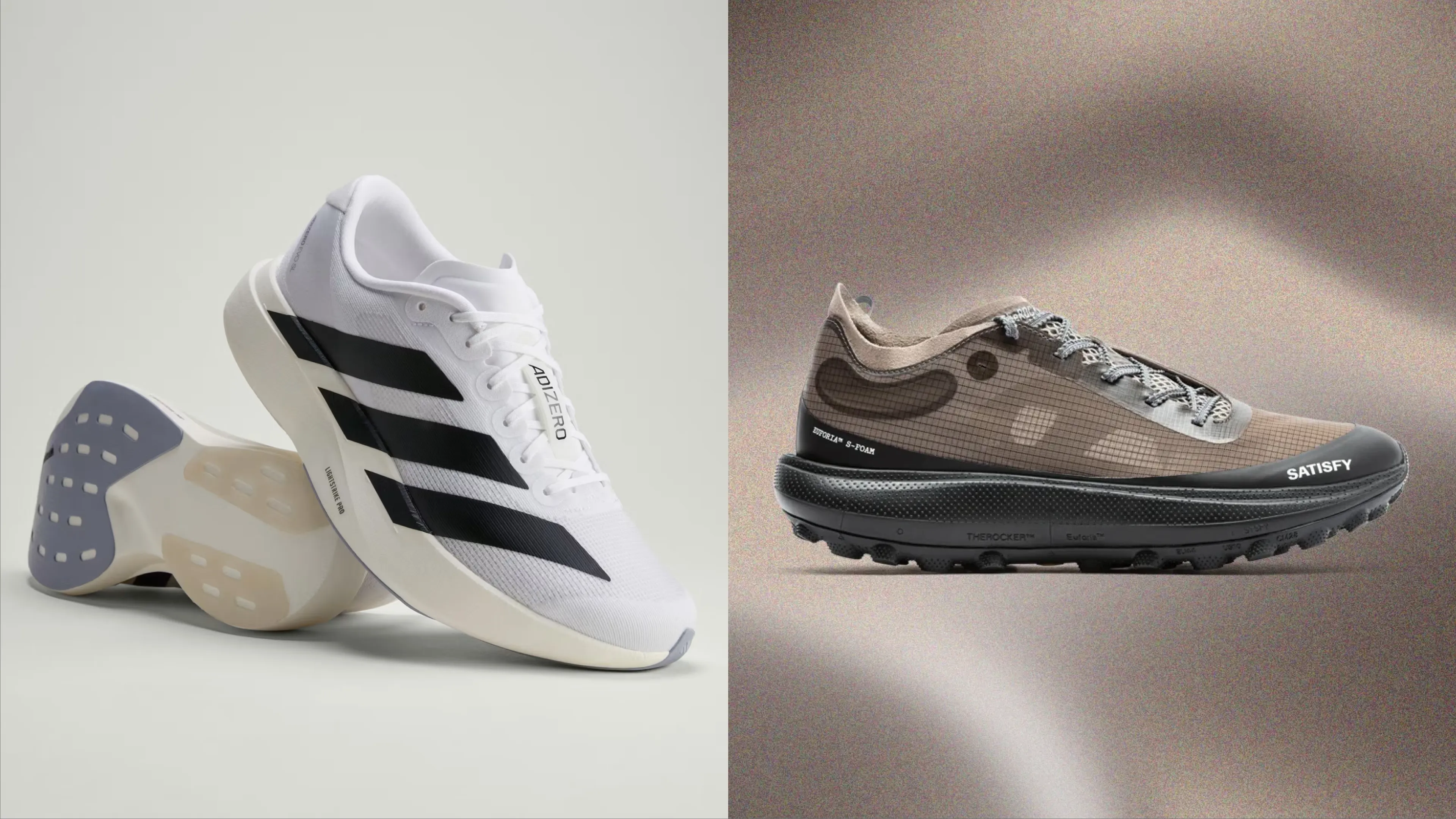
The Aura Opportunity:
Adidas and Satisfy

In our series “The Aura Opportunity,” we explore how brands can use their aura to stand out in a world that is getting louder, and what established players and challenger brands can learn from each other. Kristin Janoschka, Executive Director Consulting, takes a closer look at Adidas and Satisfy.

Our world is getting louder all the time. And brands are no longer being heard by their audiences. What helps? Not more communication, but genuine relevance! How do you create it? By building aura, shaping rituals, telling a myth, and at the same time cultivating a sense of mystery. This is something not only established brands can achieve, but challenger brands as well.

Adidas: A hundred years old, yet constantly reinventing itself 


How many German brands can you think of that possess true global cultural influence? Our minds tend to jump to the country's traditional strengths: engineering, technology, and automotive brands. In the process, we often overlook Adidas. 


With a century of sports footwear history behind it, Adidas has long established itself as a globally successful lifestyle brand. I have enormous respect for the balancing act the company manages: partner to professional athletes, supplier for grassroots sports, and lifestyle brand all at once. 


Adidas continually reinforces its commitment to performance. In 2026, Sabastian Sawe becomes the first person to run a marathon in under two hours at the London Marathon. On his feet: the Adizero Adios Pro Evo 3. A shoe that sells out immediately upon release. At the same time, Adidas creates memories that span generations and celebrates its iconic three stripes as a distinctive visual code. Vintage. Original. Desirable. The brand also enters collaborations that build cultural relevance with new audiences: Lionel Messi serves as an ambassador, but so do Bad Bunny and Pharrell Williams. Adidas collaborates with partners in mobile gaming, with Arte Antwerp, and with Disney. In doing so, it skillfully unlocks new communities.

What brands can learn from Adidas:

  • "The Brand with the Three Stripes": Adidas owns a powerful visual code and consistently protects it.
  • Allow flexibility: The three stripes are robust enough to work across vastly different expressions, from retro to performance, from product design to communication.
  • Create cultural relevance across diverse audiences: through smart collaborations in lifestyle and entertainment.
  • Prove your performance promise: Adidas develops products that enable elite athletic achievement.


Satisfy: The reflective counterstatement 


I run. Always without music and preferably alone in the woods. Just footsteps, breathing, and eventually a quieter mind. Perhaps that is exactly why the running brand Satisfy fascinates me. 


The brand has cleverly carved out a niche where running is not primarily linked to performance, but instead serves as a creative, almost meditative counterbalance to everyday life. Satisfy was founded in 2015 by Brice Partouche, who is also behind the streetwear brand April77. Its products are exceptionally well made, packed with thoughtful functional details, and designed for customers who care about design. More importantly, they communicate a mindset. 


And that mindset gives the brand aura. 


The idea resonates. In 2024, Satisfy doubled its revenue. In 2025, it secured fresh growth capital and accelerated its global expansion.

What brands can learn from Satisfy:


  • Focus on a perfectly defined niche: running as a meditative escape.
  • Story beats logo: Satisfy is recognized through its worldview and attitude, not through loud branding.
  • Break category conventions: Instead of behaving like a traditional sports brand, Satisfy borrows the tools of a fashion label, with a strong focus on editorial content, premium photography, and references drawn from punk and alternative music.

The Aura Opportunity

What makes the story of Adidas and Satisfy particularly interesting is the moment their paths crossed: After all, running is not just about apparel. It is, above all, about the right shoes. Designing and manufacturing high-performance footwear is an enormous challenge, one where experience from the fashion industry offers little help. 


Most challenger brands seek out experienced partners for this task. Satisfy chose the harder route and developed its running shoes independently. 


The surprising outcome: Satisfy did not approach Adidas. Adidas approached Satisfy and proposed a collaboration. The first result was the Adizero Adios Pro 4 Satisfy, unveiled in May. 


A smart move, if you ask me, because each partner brings something the other does not possess to the same extent: performance, technology, heritage, and scale on one side; cultural perspective, intimacy, and a highly distinctive interpretation of running on the other. 


The collaboration reveals something else as well: Established brands must keep evolving. Not their DNA. But their operating system. DNA asks: Who am I? The operating system asks: How do I stay relevant? The art lies in changing the system without losing the identity. In adapting to new communities, cultural codes, and experiences. 


Adidas and Satisfy are not meeting in a duel. The difference in scale is simply too vast: Adidas generated nearly €24 billion in revenue in 2024, while Satisfy generated €11 million. Instead, they energize one another in a cycle: Challengers bring new perspectives. Established brands turn those perspectives into new relevance. 


That's what I think about when I'm running. Alone. In the woods.


Image source: adidas.com; satisfyrunning.com


Get in touch!

Kristin Janoschka
Executive Director Consulting

Mail to Kristin